
Discover the world of Esports in Vietnam with insights about its market size, popular games, top teams, commercial opportunities, and challenges ahead.
How many Esports gamers are there in Vietnam?
According to estimates from Nikkei in October 2022 and eSports Insider in May 2023, the number of Esports enthusiasts in Vietnam exceeds 13 million - approximately 13% the country’s population.
What does the Esports gamer in Vietnam look like?
The demographic breakdown reveals a predominantly male audience (69.7%), with females accounting for 30.3%. Notably, younger age groups dominate the Esports landscape, with 35% of enthusiasts falling between 13 and 17 years old, and 40.8% between 18 and 22 years old.
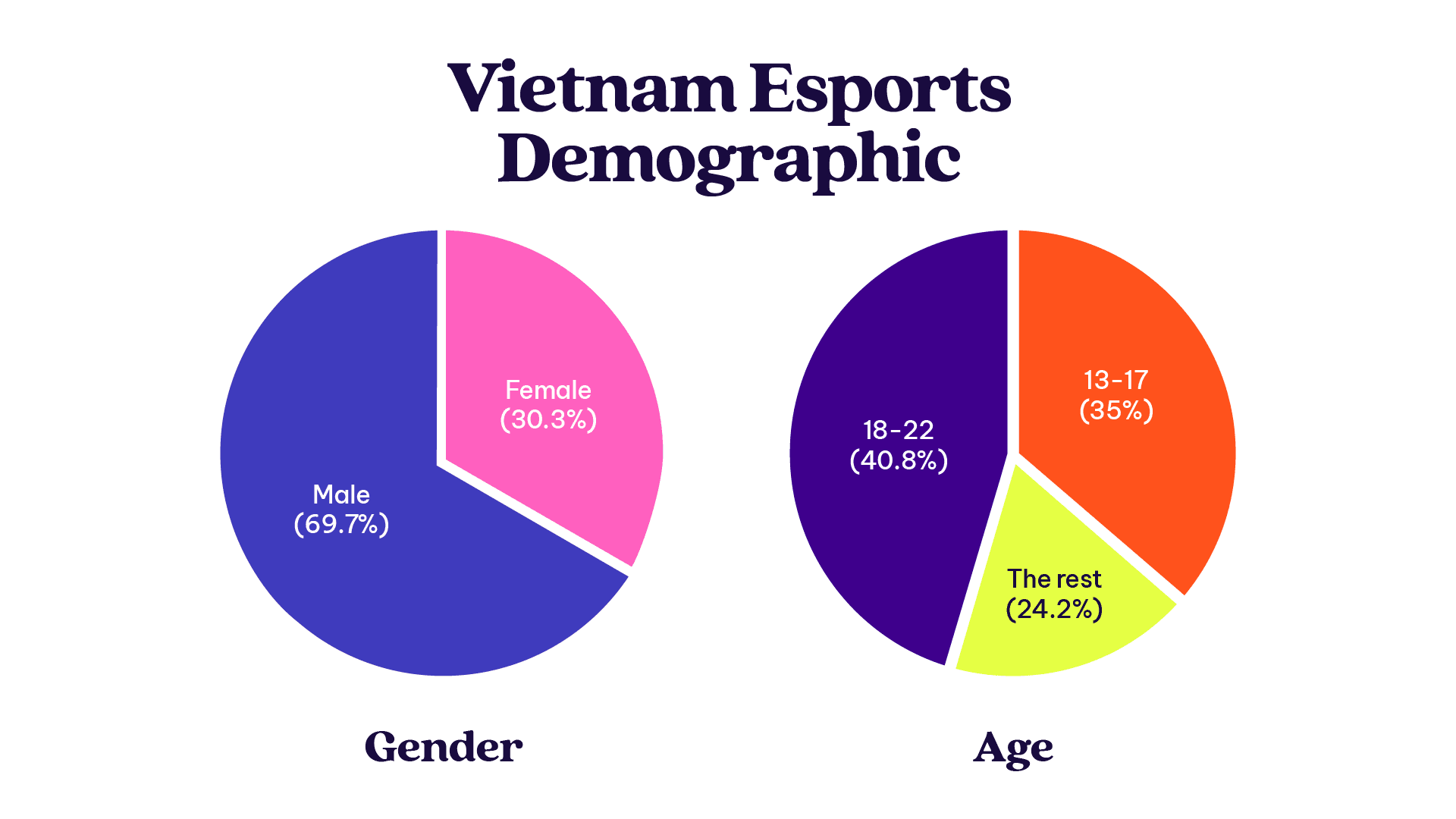
The demographic breakdown of Esports fans in Vietnam
While the number of Esports enthusiasts in Vietnam is already impressive, a closer look at the statistics reveals even more interesting insights.
Nearly half (48.8%) of these enthusiasts have been following eSports for 2-5 years, suggesting a passionate and engaged fanbase.
This dedication is further underscored by the fact that more than half (52.5%) watch Esports content every day, solidifying it as a major part of their media consumption habits.
But the community encompasses more than just die-hard fans.
According to the report of Vero in 2021, almost half (47.6%) of these Esports enthusiasts identify themselves as casual gamers, spending a moderate 5-10 hours per week engaging with their favorite titles.
This points to a broader trend of Esports' growing mainstream appeal It attracts not just hardcore fans but also individuals seeking a more laid-back gaming experience.
What are the most popular games in Vietnam?
Popular Esports games in Vietnam can be broken down into Multi Player Online Battle Arenas (MPOB), Battle Royal, First Person Shooters (FPS) and Sports categories.
The most played games in Vietnam are:
- League of Legends
- Arena of Valor
- League of Legends Wild Rift
- DOTA 2
- PUBG
- PUBG Mobile
- Free Fire
- CS2
- Valorant
- Crossfire
- eFootball
- FC Online
- NBA 2K
What are the most popular games in Vietnam by device?
Vietnamese gamers play on mobile, PC and next generation consoles such as the Playstation. Popular games on mobile devices include Free Fire, PUBG Mobile, League of Legends Wild Rift and Arena of Valor. Popular games on PC include League of Legends, DOTA2, PUBG and Valorant. Popular games on other devices such as next gen consoles include Pokemon, NBA2K, eFootball, FIFA and FC Online.
What are the most popular games by major publishers in Vietnam?
Popular game publishers in Vietnam include Garena with Free Fire, FC Online and Arena of Valor. VNG publishes League of Legends, PUBG Mobile, League of Legends Wild Rift and Valorant. VTC publishes Audition and Crossfire.
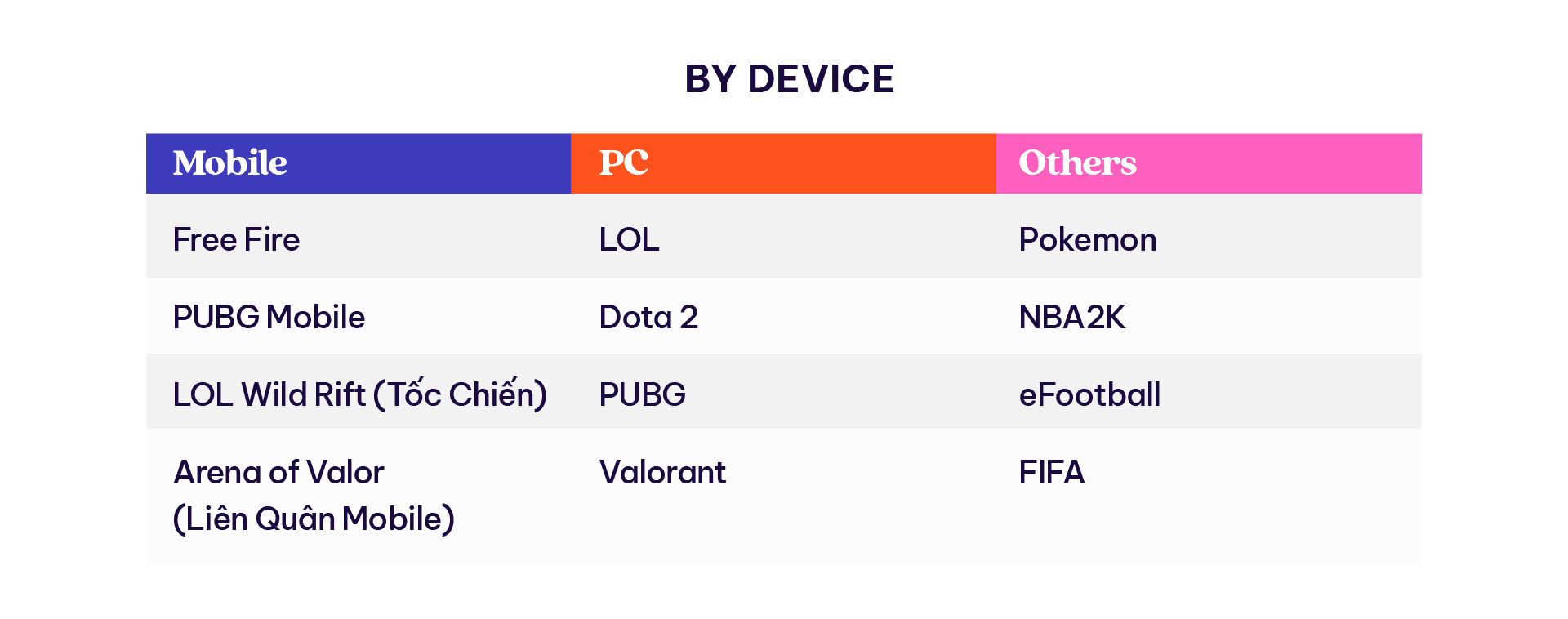
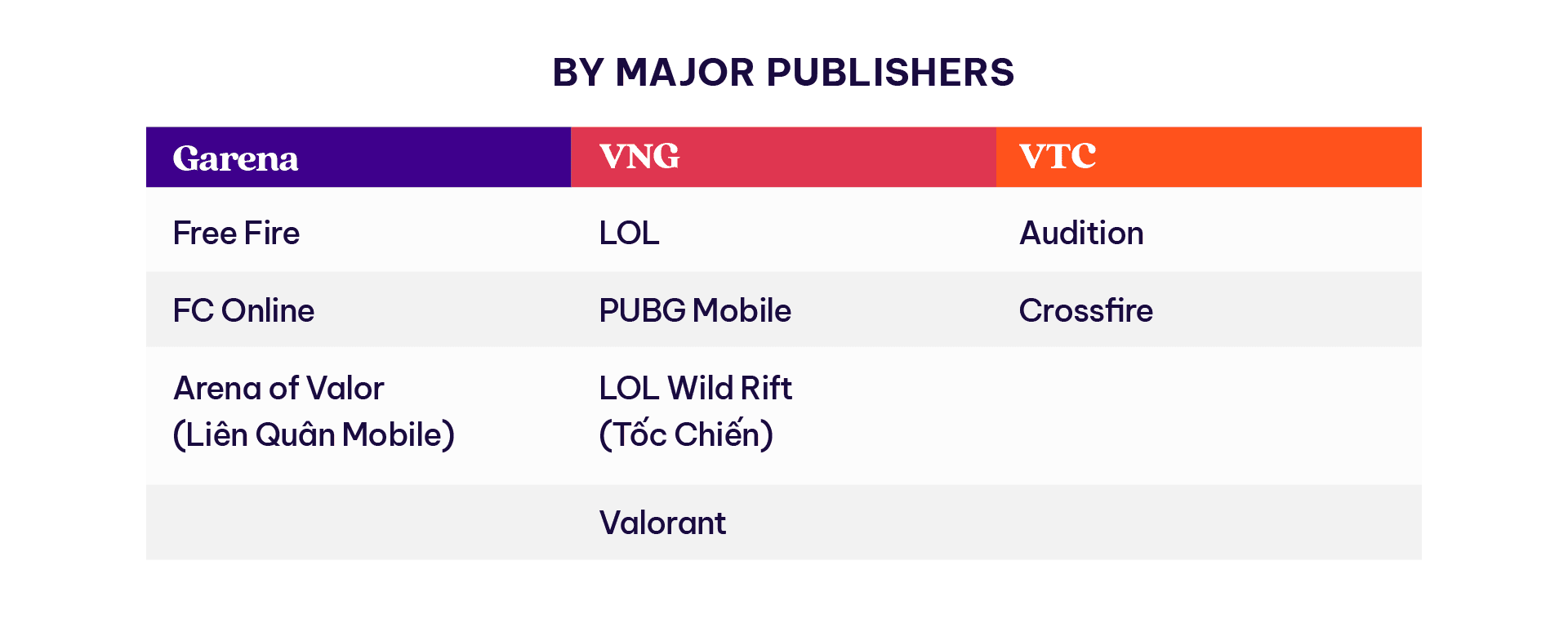
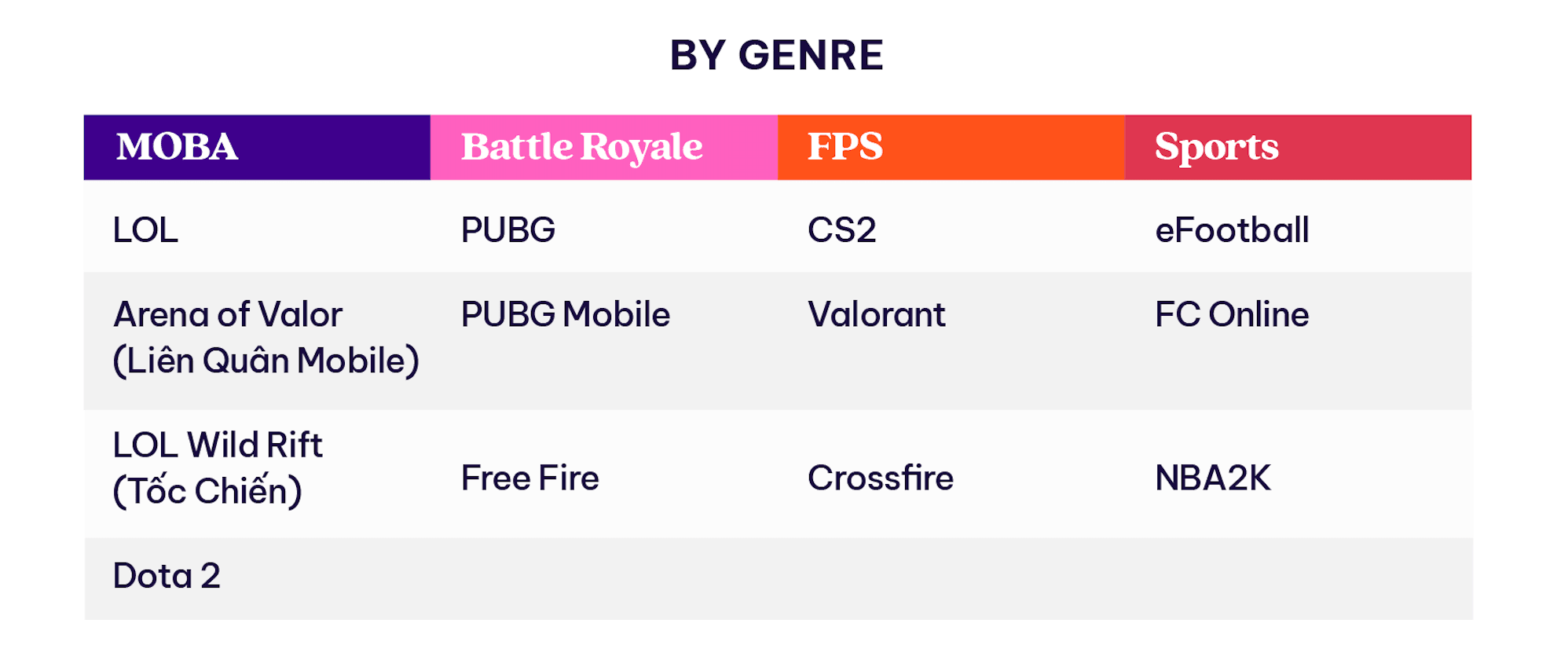
Most popular games in Vietnam
What is the most popular game in Vietnam?
Despite the diverse landscape of Esports in Vietnam, League of Legends (LoL) dominates. 67.2% of players and 68.1% of viewers flock to League of Legends, surpassing all other titles, according to Vero’s survey.
Beyond Vietnam, LoL boasts the highest number of monthly active players (180 million) and the highest global revenue ($1.82 billion) among PC games.
The 2023 Worlds Finals, which is the most prestigious LoL tournament held annually, captivated audiences to become the most-viewed Esports event ever, according to Esports charts statistics.
With an average viewership of more than 1.2 million racking up 146.8 million total hours of watch time, LoL proves its ability to enthrall fans globally.
Vietnamese fans are no exception. At the Worlds Final 2023, views of Vietnamese content surpassed English content on YouTube for the first time ever: 639,978 vs 466,127.
LoL’s free-to-play model, a diverse “Champion” pool, regular updates and balance changes are the reasons why LoL dominates the Vietnamese gaming market.
Riot Games actively cultivates the Vietnamese LoL community through regional tournaments and events. This creates a sense of national pride and fuels Vietnamese aspirations to compete on the global stage.

Fans in the LoL arena at the Worlds2023
While GAM Esports' incredible run at Worlds 2023 sparked national pride and boosted viewership, Vietnam's deep-rooted LoL passion, accessibility, and nurtured community all fueled the record-breaking numbers.
GAM was the catalyst, but a broader system ignited the viewership boom.
“The numbers from Worlds2023 are undeniable,” says TK Nguyen, CEO of GAM Esports.
“Vietnam has emerged as a global powerhouse in League of Legends, shining not just on the stage but also in viewership. This is more than a game; it’s the future of Esports entertainment.”

“Vietnam has emerged as a global powerhouse in League of Legends, shining not just on the stage but also in viewership. This is more than a game; it’s the future of Esports entertainment.”
TK Nguyen
CEO of GAM Esports
What are the most popular Esports teams in Vietnam?
According to Statista data from 2020, GAM Esports League of Legends team is the most popular Esports team in Vietnam with regards to its following on social media. Other popular teams include Team Flash, Heavy Esport, EVOS Esport, Saigon Buffalo, Refund Gaming and Friends Forever Gaming.
Vietnam’s Esports connection with China and South Korea
The Vietnamese Esports scene finds itself heavily influenced by its neighbours in East Asia, South Korea and China.
This can be attributed to two key factors: firstly, the strong cultural influence these nations hold, with their media and gaming trends frequently spilling over into Vietnam. South Korea's dominance in MOBAs like League of Legends and China's mobile gaming boom have directly shaped Vietnamese preferences.
Secondly, Vietnam’s major publishers often partner with Chinese gaming giants, providing access to popular titles and fostering a closer connection between the Esports ecosystems.
Chinese tech giant Tencent is a current major stakeholder in both Garena (via Sea Ltd) and VNG, as well as multiple other gaming studios/publishers such as Krafton, Ubisoft, Riot etc
How much money does a Vietnamese gamer spend?
The Southeast Asia 2023 Esports Market Report suggests an Annual Revenue Per User (ARPU) of $0.73 for Vietnam in 2022. While Vietnam's ARPU lags behind established Esports markets like South Korea and North America due to income disparities, its significant potential is undeniable.
When it comes to spending, the willingness to invest in their passion is evident. More than half of the enthusiasts in both the 13-17 (51%) and 18-22 (57%) age groups are willing to spend money on games.
This spending translates into real revenue for the industry, with 55.5% of players admitting to making in-game purchases.
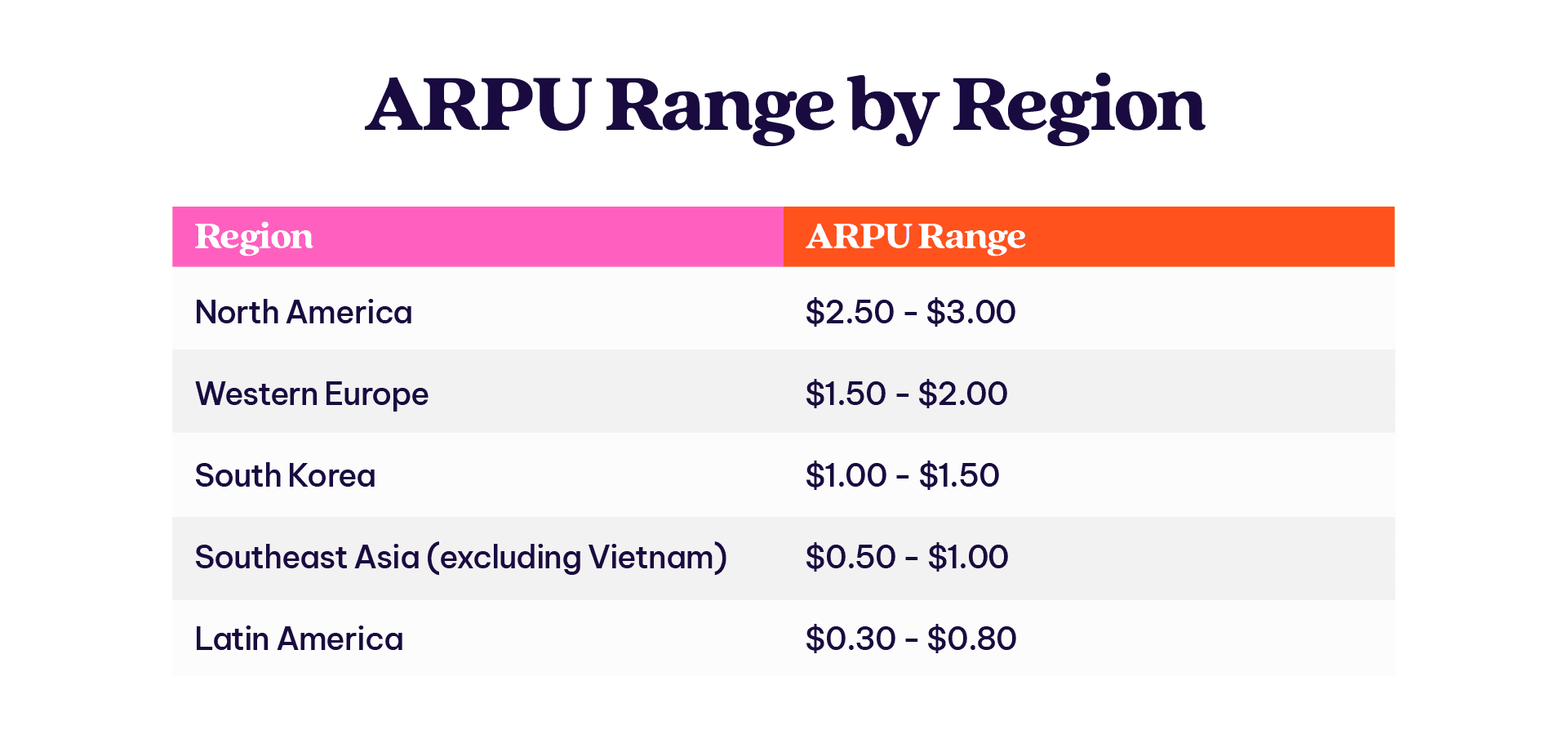
ARPU range by region (Excluding Vietnam)
Commercial opportunities for brands in Vietnam's Esports
The young and engaged audience of Esports presents an unmissable opportunity for brands in Vietnam.
The Esports community is tech-savvy with high spending power and passionate fandom, ticking all the boxes to enable brand buzz and engagement for brands.
According to Vero, 86% of the Esports audience claim that they interact with brand advertising efforts.
T1 - the world’s number one League of Legends team and the Worlds four-time winner from South Korea - is currently sponsored by a range of brands from different categories, from Communications and Tech to F&B, Sportswear, Automotive, Finance and Gaming Accessories.
Given the demographics and interests of Esports enthusiasts, the most frequent industry partners tend to be gaming accessory companies, tech, and energy drink brands.
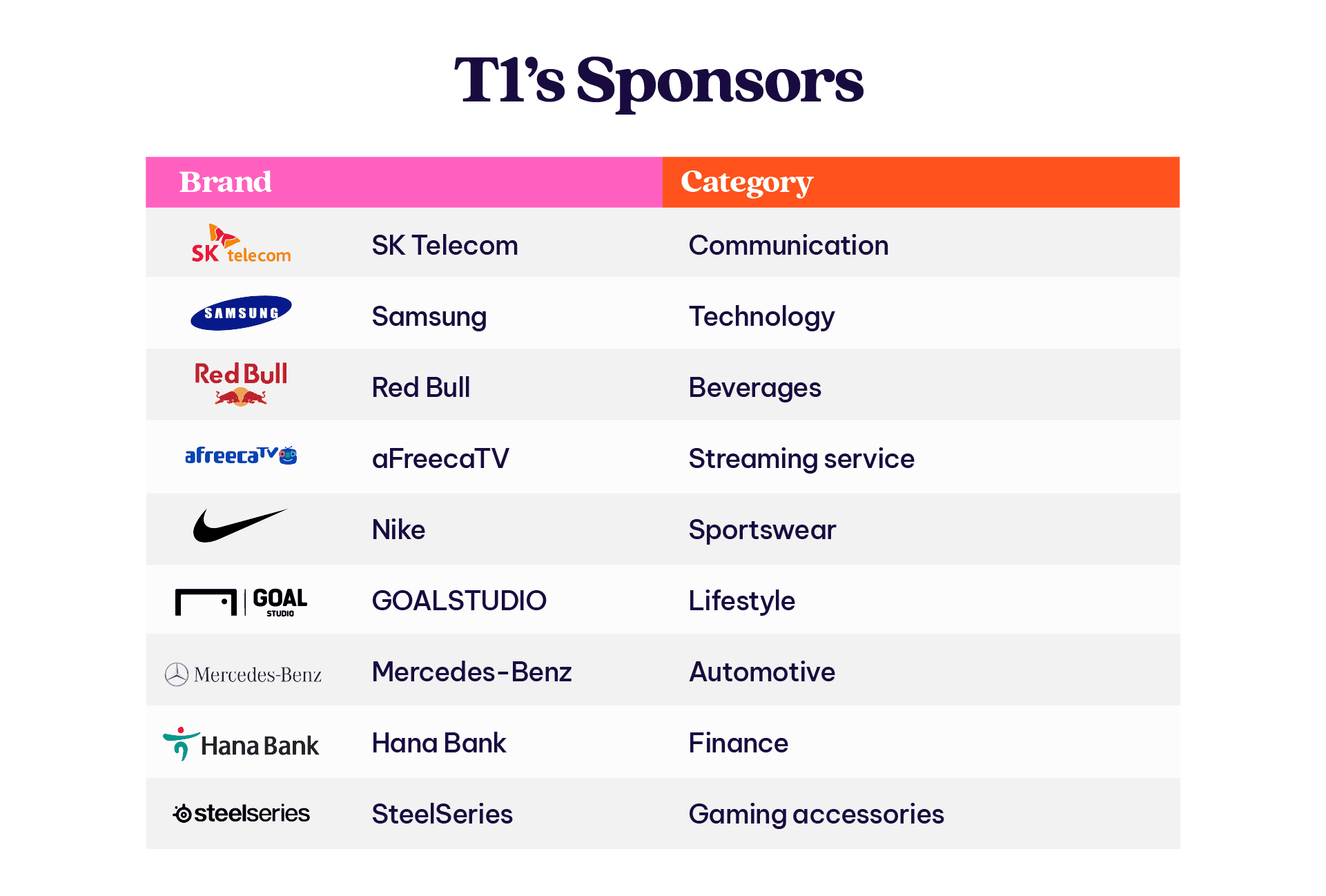
South Korea's top Esports team has a variety of commercial partners
Which brands sponsor Esports in Vietnam?
Brands that are spending most money in the Esports sector in Vietnam include Oppo, Vsmart, Samsung Galaxy, Predator, Pisen, Intel, Logitech, Phong Vu, Mountain Dew, Sting, Yomost, Monster, Hao Hao, My Kolor, Clear Men and Yamaha.

An Esports competitor at Worlds23
What is the business model of Esports in Vietnam?
Commercial opportunities for Esports in Vietnam are similar to that of any other sport in the world. Vietnamese teams and players win prize money, sell merchandise, earn sponsorship revenue and can become KOLs. The tournament brands make money from naming rights sponsorships, merchandise, social media and live streaming.
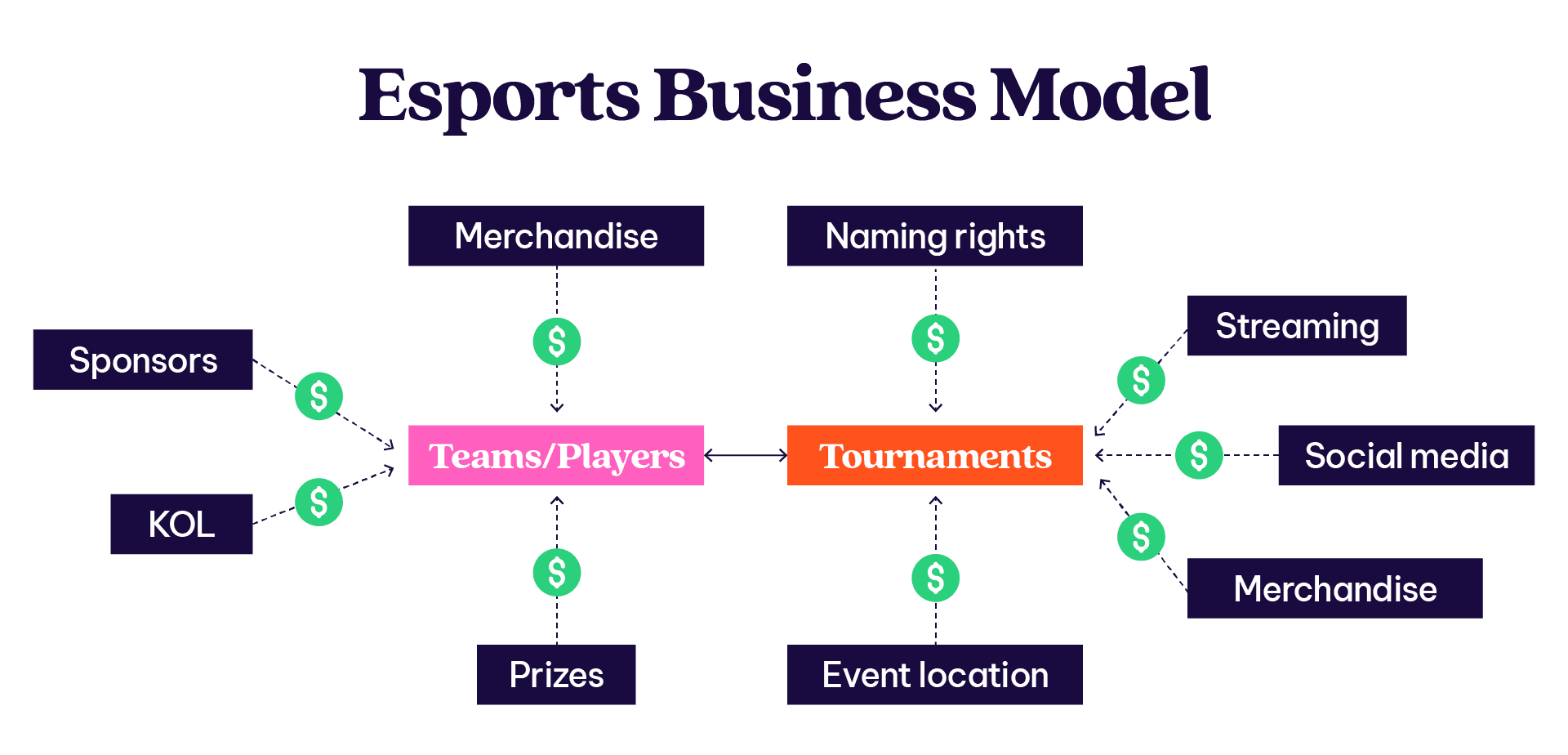
How Esports is commercialised in Vietnam
What are the challenges for Esports in Vietnam?
Vietnamese esports, despite its passionate fanbase and booming popularity, faces some significant hurdles in reaching its full potential, such as unclear regulation, economic downturns, negative stereotypes about gaming and gamers, and a lack of professional orgnisations and infrastructure.
Unclear regulations:
While Vietnam's Esports scene has exploded with passion, a major issue holds it back: unclear regulations.
Tournaments run in a legal grey area, which is confusing organisers, players, and investors.
Imagine hosting a competition unsure of prize pool taxes or player contracts. This makes sponsors and investors nervous, hindering growth and professionalism.
But hope arrives with organisations like VIRESA, which is building bridges to international standards. Balancing growth with fairness is key, and learning from experienced regions like South Korea can show the way.
The future of Vietnamese Esports depends on navigating this uncertainty with transparency, cooperation, and clear rules.
With everyone working together, the Vietnamese Esports arena can reach its full potential and dazzle the world with its fire and talent.
Learning from China:
History whispers that what plays out in China often echoes in Vietnam, from ancient dynasties to modern markets. And so China's approach to Esports regulations could present a complex case study for Vietnam.
While China’s strict measures brought order to a booming industry, the recent consequences – particularly for their massive gaming community – offer valuable lessons for Vietnam to navigate its own Esports landscape.
Vietnam can learn from China's regulatory structure while avoiding overly restrictive measures with:
- A balanced approach that regulates playtime without stifling creativity
- Clear communication and collaboration between the government, developers, and the gaming community to avoid misunderstandings, friction and stifled progress
- The promotion of responsible gaming practices, encouraging healthy competition, and creating a supportive environment for developers and Esports professionals
By carefully navigating the lessons from China's experience, Vietnam can shape its own Esports regulations that promote responsible gaming, support industry growth, and most importantly, preserve the passion and enjoyment of its vibrant esports community.
Economic downturns:
With the global economy facing uncertainty, sponsorships and investments in Esports might dwindle.
This could impact tournament prize pools, salaries for players and staff, and overall development.
Vietnamese esports organisations will need to be adaptable and find new revenue streams during economic downturns.
This could involve diversifying sponsorships, exploring alternative funding models, and focusing on cost-effective operations.
Negative stereotypes about gaming:
A common misconception in Vietnam portrays gamers as lazy, unproductive, and even addicted.
This stigma discourages parents from supporting their children's Esports aspirations and hinders the industry's overall image.
Esports organisations wil benefit from actively combating negative stereotypes by highlighting the positive aspects of gaming, such as its potential for skill development, teamwork, and career opportunities.
Educating parents and the public about the benefits of esports will be crucial for the success of the industry in Vietnam.
Lack of professional organisation and infrastructure:
The rapid growth of Vietnamese Esports has outpaced the development of professional organisations and infrastructure.
This results in logistical challenges, inconsistent tournament formats, and a lack of long-term player development programs.
Investing in professional esports organisations, training facilities, and coaching programs is essential for Vietnam to compete at the international level. Signs of such investments are already evident; the University of Technology and Management (UTM) and Pearson UK signed an MOU in November 2023 to provide Esports BTEC courses in Vietnam.
Long-term development plans for players and the industry as a whole are crucial for sustainable growth.
While these challenges are significant, Vietnam can overcome these hurdles if they approach them head on, and establish itself as a major player in the global Esports arena.
What is the opportunity for Esports in Vietnam?
As Vietnam's esports scene explodes, a few opportunities promise to bring it to even greater heights.
Regional collaborations: joining forces with Asian giants:
Vietnam shares a deep love for Esports with neighbouring powerhouses such as China and South Korea. This common ground can lend itself to cooperation and knowledge exchanges, which could accelerate growth.
Chinese and South Korean Esports giants possess vast resources and expertise. Strategic partnerships can attract investments, build infrastructure, and elevate Vietnam's competitive scene.
Collaboration opens doors for Vietnamese players and teams to compete in top regional leagues, gain valuable experience, and challenge global esports giants.
Mobile games - reaching millions through smartphones:
Vietnam boasts a 98% smartphone penetration rate, making mobile gaming the dominant force. Leveraging this, developers can create Vietnamese-centric mobile Esports titles to engage the massive audience.
Mobile Esports are inherently more accessible than PC or console-based games, requiring minimal equipment and offering flexible playtimes. This broadens the competitive pool and fosters talent development.
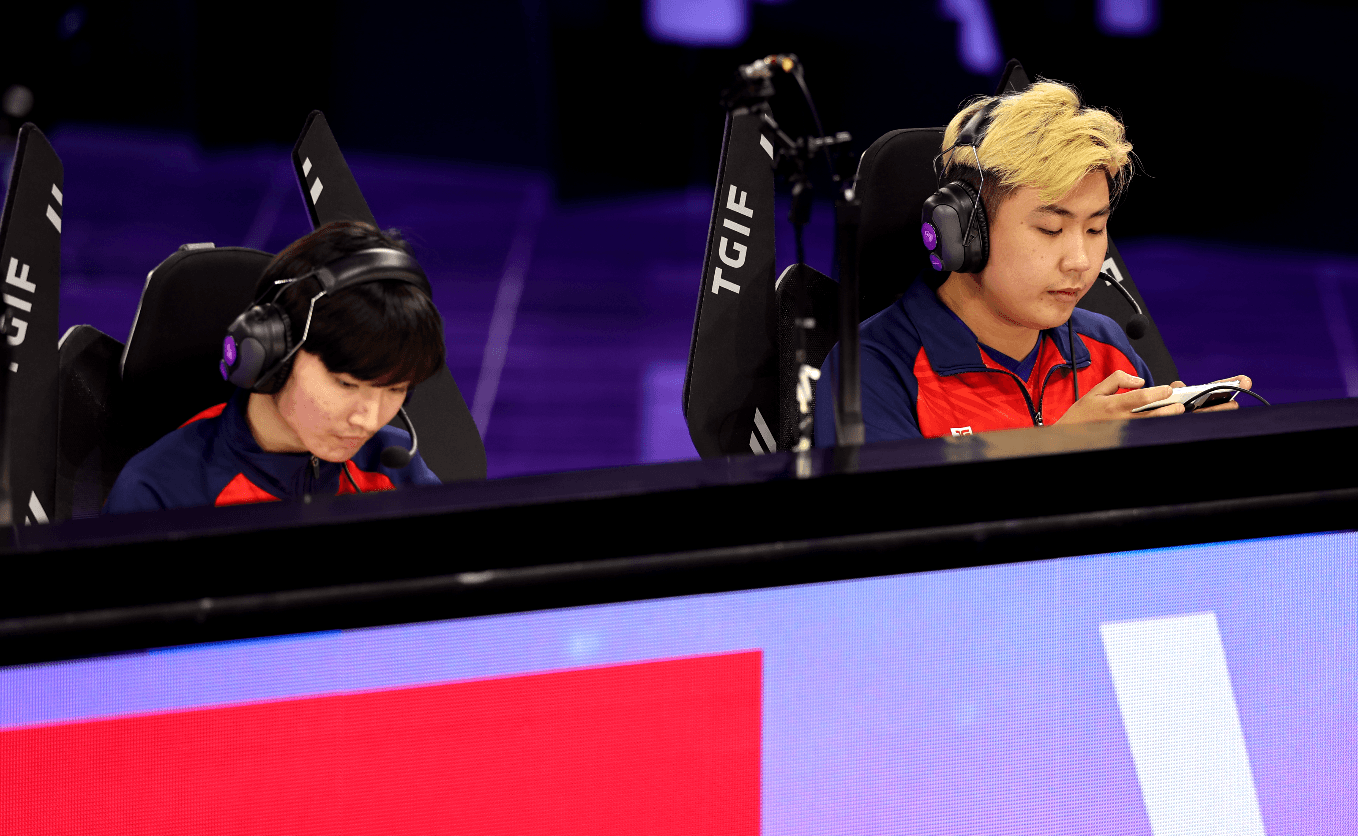
Vietnamese Esports gamers using mobile
Popular titles such as Arena of Valor (Liên quân Mobile), Free Fire and potentially Mobile Legend Bang Bang host international tournaments with millions of viewers. Vietnam’s rise with these games can put the country on the global Esports map.
By embracing regional collaboration and capitalising on the mobile gaming boom, Vietnam's Esports scene can unlock its full potential. Imagine Vietnamese teams battling for glory in major Asian leagues, Vietnamese mobile game developers creating global hits, and the entire nation united by the thrill of Esports.
The future is bright for Vietnam's Esports, and regional collaborations and the development of domestic mobile games could be its stepping stones to greatness.