Vietnam is a land of opportunity, but navigating its business culture requires more than enthusiasm.
Success here depends on patience, adaptability, and understanding the unspoken rules.
Deals aren’t sealed with a simple “yes”, trust isn’t built overnight, and the way people communicate can be as intricate as a bowl of phở.
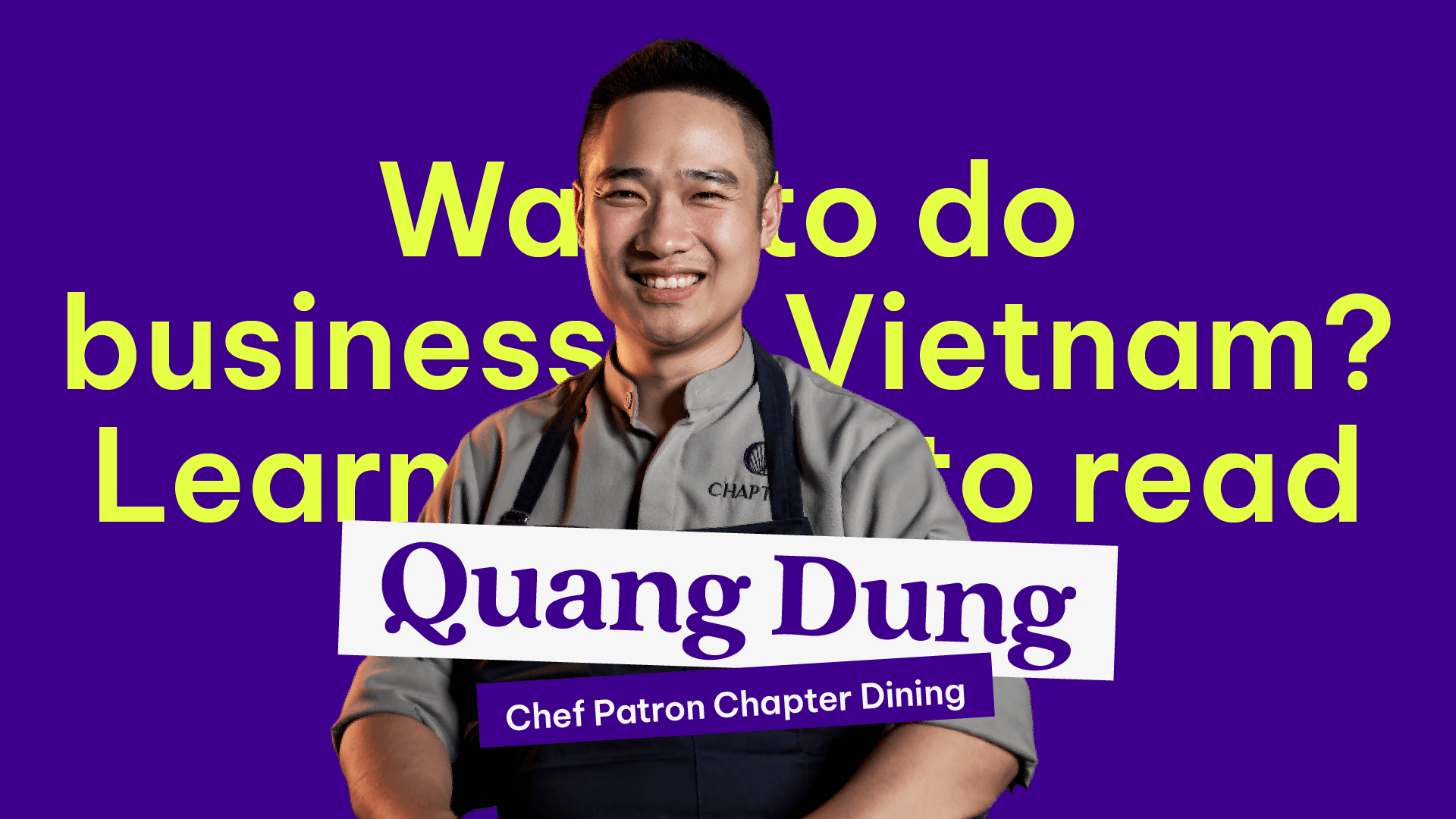
To uncover what truly matters when doing business in Vietnam, in this episode of You Don’t Know Vietnam, we take insights from chef patron Quang Dũng, the mastermind behind Chapter Dining and Tales by Chapter, who has mastered the delicate balance of relationships, trust, and strategy in the Vietnamese market.
Key takeaways:
- “Yes” doesn’t always mean yes.
- Business “brothers” aren’t necessarily your allies.
- Trust takes time, but once earned, it’s unshakable.
- Your employees are your most important customers.
- Vietnamese business culture isn’t Western business culture, please adapt!
The land of “Yes” that sometimes means “no”
The untrained ear may hear “yes” as a sign of agreement, but in Vietnam, “yes” often means “I hear you,” “That’s interesting,” or, in some cases, “Not a chance, but I don’t want to be rude about it.”
“Yes, let’s see.” “Yes, we’ll discuss further.” “Yes, it sounds interesting.”
It all sounds promising, until weeks later, nothing has moved forward.
Vietnamese small businessmen are afraid of saying no, they are really afraid of hurting your feelings.
Quang Dung
Chef Patron - Chapter Dining
Learning to decipher these subtle cues will save a great deal of time and frustration.
The real answer isn’t always in the words but in the pauses, the hesitations, and the sudden need to “think about it.”
Brotherhood or business? Sometimes both, sometimes neither
Vietnamese business culture is warm.
People will call you “brother” after one meeting, invite you for dinner, and insist that you’re practically family.
But does that mean your deal is secure?
Absolutely not.
Quang Dung learned this the hard way. “Sometimes they say, ‘We are brothers, don’t worry about that!’ But sometimes I just wish they’d say, ‘We are not brother, so we are just business partner and there are certain things we have to worry about”
While warmth and camaraderie grease the wheels of business, they don’t replace clear agreements.
Remember: a handshake over dinner is no substitute for ink on paper.
Trust: Fast in the mountains, slow in the cities
Trust is currency in Vietnam, but its value is different depending on where you go.
If you do business with ethnic minority groups in Vietnam’s northern mountains, trust is instant.
“They don’t care what I do,” Quang Dũng laughs. “All they care about is, ‘Do you drink with me? Will you stay in my house?’”
They don’t care what I do. All they care about is, ‘Do you drink with me? Will you stay in my house?’
Quang Dung
Chef Patron - Chapter Dining
But in Hanoi or Ho Chi Minh City? Trust is earned, tested, and built over time.
Vietnamese business culture values reliability above all.
Miss a deadline, change terms without discussion, or fail to deliver, and the entire relationship can evaporate overnight.
But once trust is earned, it is fiercely loyal and enduring.
Employees are customers too - treat them that way
One of Quang Dung’s strongest beliefs?
Employees should be treated like customers because happy staff will create successful businesses.
At his restaurants, he implements Employee Experience Management (EXM) to ensure staff have proper changing rooms, high-quality meals, and a rooftop canteen. The result? Employees stay, reducing costly turnover.
“Staff turnover in F&B is high, but not in my restaurants it’s a lot lower than the average F&B industry,” he says. “Why? Because we treat our employees like customers.”
A happy team leads to a thriving business, and in Vietnam, loyalty in the workplace is not given lightly.
It must be earned.
Staff turnover in F&B is high, but not in my restaurants it’s a lot lower than the average F&B industry. Why? Because we treat our employees like customers.
Quang Dung
Chef Patron - Chapter Dining
When in Vietnam, please adapt
Quang Dũng initially ran his restaurant kitchen like a British fine dining establishment with strict hierarchy, military discipline.
It didn’t work.
Vietnamese employees value structure, but they also need warmth and camaraderie.
He adjusted his approach, integrating the best of both worlds.
Now, his team thrives, his restaurants flourish, and his lessons apply to any foreigner doing business in Vietnam.
To succeed here, you need patience, adaptability, and a sharp ability to read between the lines.
Quang Dung figured it out, and so can you.
And most importantly, when invited for a drink, don’t say no.
You never know where it might lead.