
From the origins of football in Vietnam during the French colonial period and the development of football post-1986, to Vietnam's fan culture and how Vietnamese football fans have developed strong attachments with foreign clubs, we offer the insider guide to Vietnamese football...
Vietnamese football history: from pre-professionalism to the V.League
Club football has existed in both Hanoi and Ho Chi Minh City since the turn of the 20th Century with the ruling French colonialists instrumental in setting up club teams throughout the regions.
Cercle Sportif Saigonnais were one of the earliest teams to play football in Saigon, quickly followed by Stade Militaire, Tabert Club and Saigon Sport. Soon after the Vietnamese populace started to establish their own teams with Gia Dinh Sport in — what was then called — South Vietnam being the pre-eminent example of the colonial era.
Most football in the first half of the 20th century was very localised, with cities and provinces organising their own tournaments.
There was then a prolonged absence of football in the country due to World War II, and then the first Indochinese War (concluding in 1954), plus the Vietnam / American War that ensured football, or any sport for that matter, was rarely a priority in a country ravaged by various conflicts from 1939 to 1975. Although some clubs were established during these times, there was certainly no centralised competition.
Clubs started to become more organised and well-established in the north and south of Vietnam respectively, formed from existing groups and organisations in a period where the country was divided (1954-1975).
In the north they were often based on state-owned organisations; the Army, Hanoi Police, while in the south it was more about workplace teams with Saigon Port, Saigon Police and the General Railways team all established between 1950-1970.
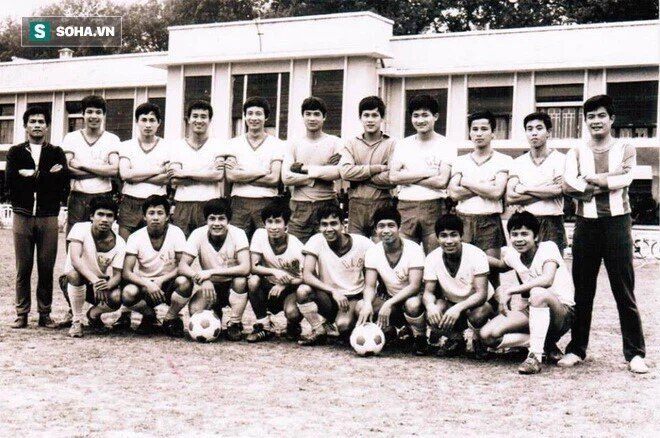
The Cong football team in 1981 - Source: Soha.vn

But until reunification in 1976, these teams were limited to playing their geographical compatriots. The teams in North Vietnam and South Vietnam never played each other as the hostilities continued.
In 1986 the Vietnamese government took a dramatic shift in the way they organised the economy and society. The new Doi Moi (Renovation) policy heralded in massive economic reforms enacted with the goal of creating a “socialist-orientated market economy”.
Essentially, Vietnam was open for business.
Foreign investment first arrived primarily via Russia and China, countries with similar political structures. But the collapse of the Soviet Union in 1991, and the effective dissolution of Comecon, meant that Vietnam had to move forward with further opening up of business to the wider world.
With a greater outward focus, eyes wandered abroad and football began to pique the interest of Vietnamese fans.
Since the Doi Moi reforms of the 1980s, football in Vietnam slowly started to become more organised, less centralised, and the existing league (operating since 1980) continued to progress and become more structured.
During the 1990s there was a significant shift in the way the sport and clubs were organised. The traditional state-organisation and industry teams had to diversify and stand more on their own feet. In response, they became more geographically and community-based.
In 2000 the league finally became a fully professional football competition. Both big police football teams, Hanoi Police and Ho Chi Minh City Police, gradually dissolved. Hanoi Police players joined a new team Hanoi Hoa Phat, while the Ho Chi Minh Police team dissolved in 2002, with players joining various teams, largely throughout the south.
Without the backing of state resources, these new clubs required funding – and that was provided by private sector firms wanting to flex their new branding muscles via the V.League championship.
Construction giant Hoa Phat and other large construction and real estate companies emerged: T&T, Becamex, Thiep Nam (Southern Steel) and Hoang Anh Gia Lai (HAGL).
They all become early investors into V. League teams - with Becamex and HAGL still remaining today.
Vietnam’s biggest football clubs
Hanoi F.C
At a glance: The capital club, five-time V.League winners and the recent dominant force in the league.
Star names: Many of the national team’s best players play for Hanoi: Do Duy Manh ,Doan Van Hau, Do Hung Dung, Nguyen Quang Hai and captain Nguyen Van Quyet.
Average attendance: 5,000-6,000.
Fan base: Independent fan club often creates large scale tifos. One of the best clubs in terms of fan engagement on social media and their supporters are known as passionate.
Viettel F.C
At a glance: Formerly The Cong (Army Team), Viettel are the “people’s club” and one of the clubs in V.League with a storied history and a link to the past. Winners of the most recent title in 2020.
Average attendance: often gets gates of 4,000-5,000.
Fan base: Everybody’s second team, a large fan base (358,793 followers) with active daily fan engagement on the socials, despite them not having mastered the marketing game.
Becamex Binh Duong F.C
At a glance: Backed by the real estate conglomerate, Becamex. The former rich club of the V.League may have struggled in the past few years, but has won the title four times between 2007 and 2015.
Average attendance: 4,250
Fan base: An established team with a core set of fans just outside of Ho Chi Minh City.
Nam Dinh F.C
At a glance: One of the few clubs with a traceable history back to 1965 (under various guises), Nam Dinh dissolved in 2011 but return to V.League 2 in 2014. Finally returned to the top flight in 2018.
Average attendance: Nam Dinh are the best-supported team in the league – often selling out the Thien Truong Stadium. In 2020 they averaged 12,333 fans per game. They hold the record for the highest modern-day V.League attendance when 18,000 turned up to watch them play Quang Nam.
Fan base: When travelling to either Ho Chi Minh City or Hanoi they also boast a strong away following, with 2,000-3,000 showing up.
Ho Chi Minh City F.C
At a glance: A club based in the city of 12,000,000 people – massive potential but has fallen short for many years.
Fan base: Zero community engagement, no fan interaction and little effort made to take the club forward.
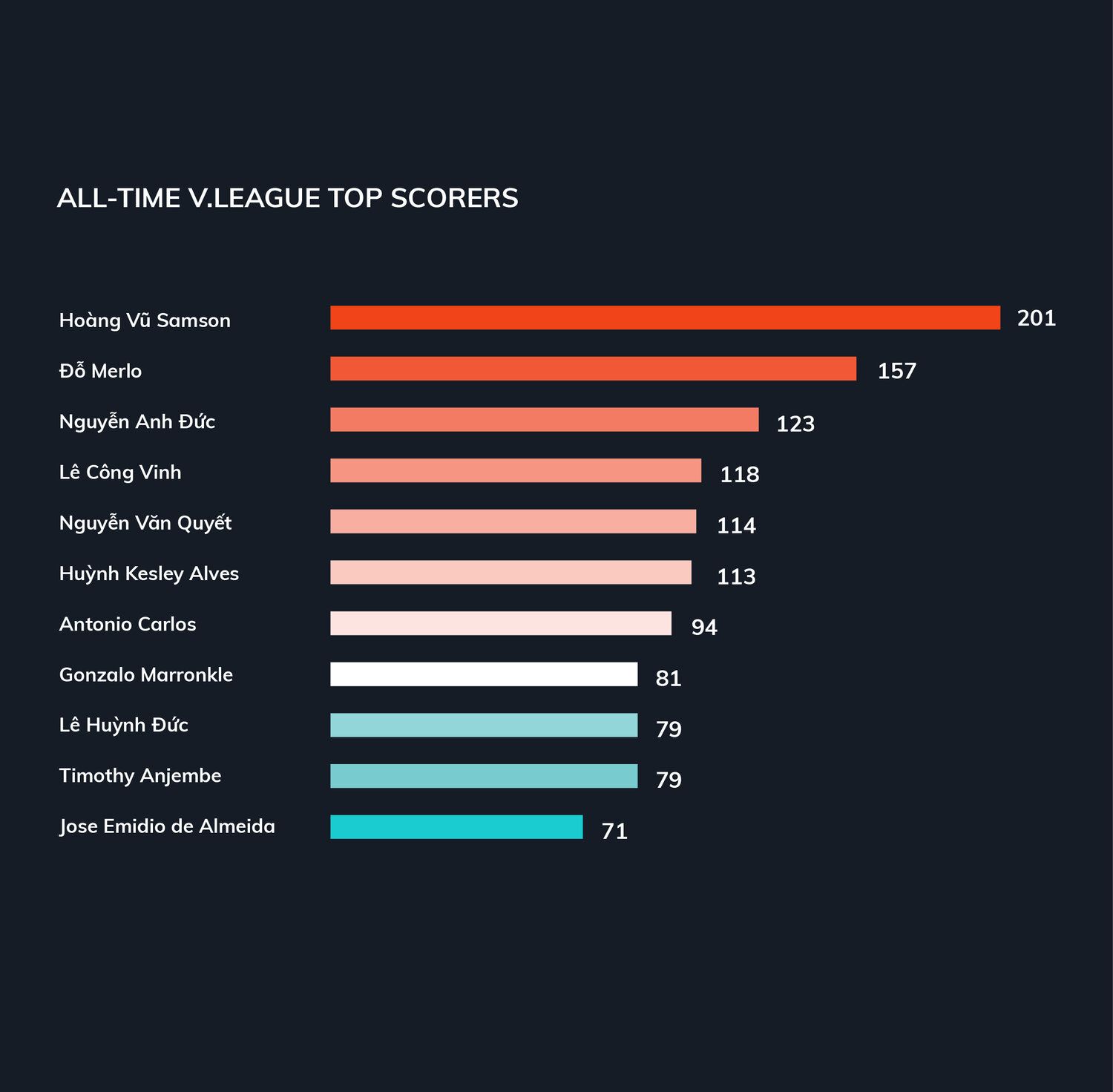
All time top V. League scorers
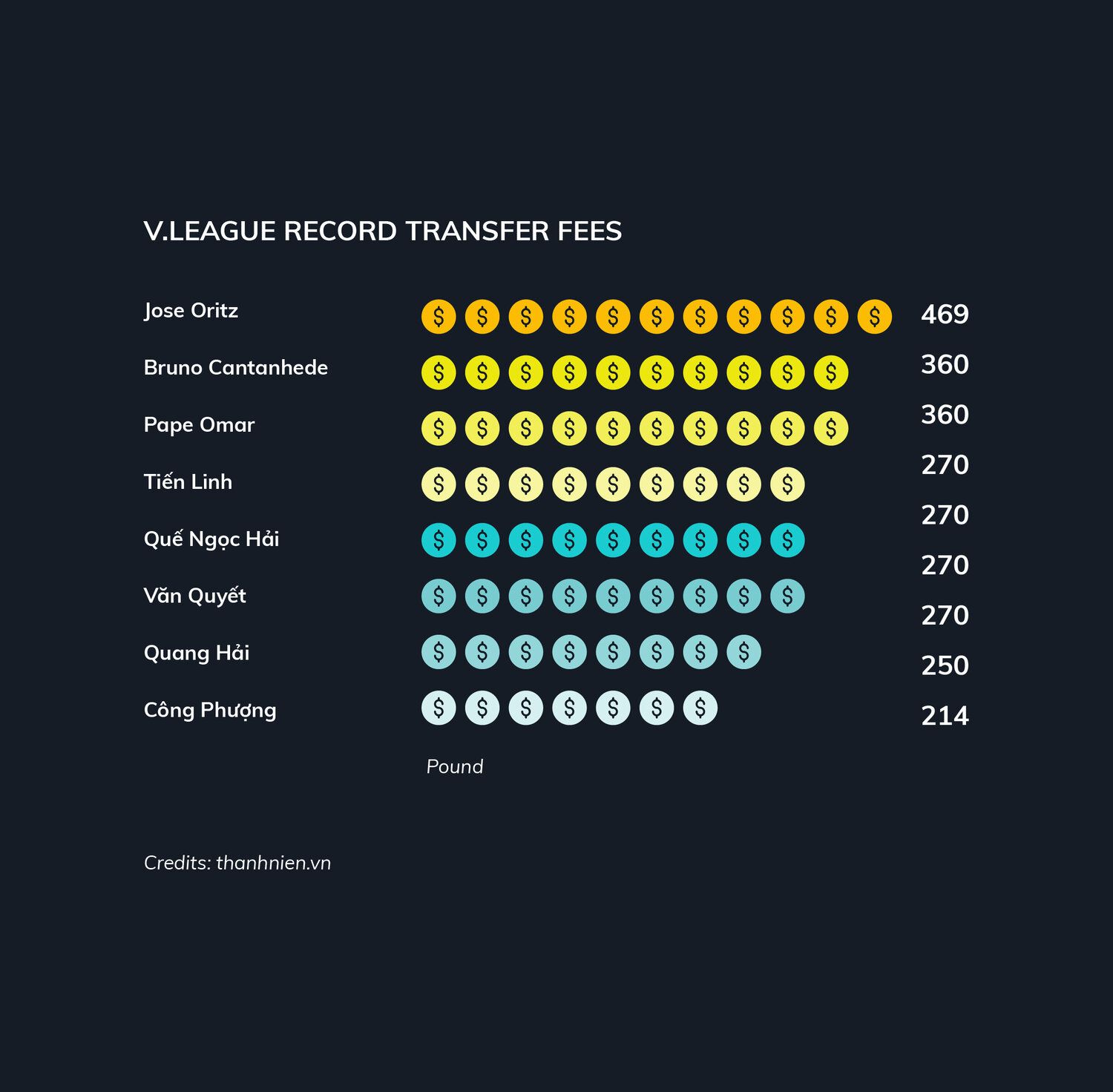
V. League record transfer fees
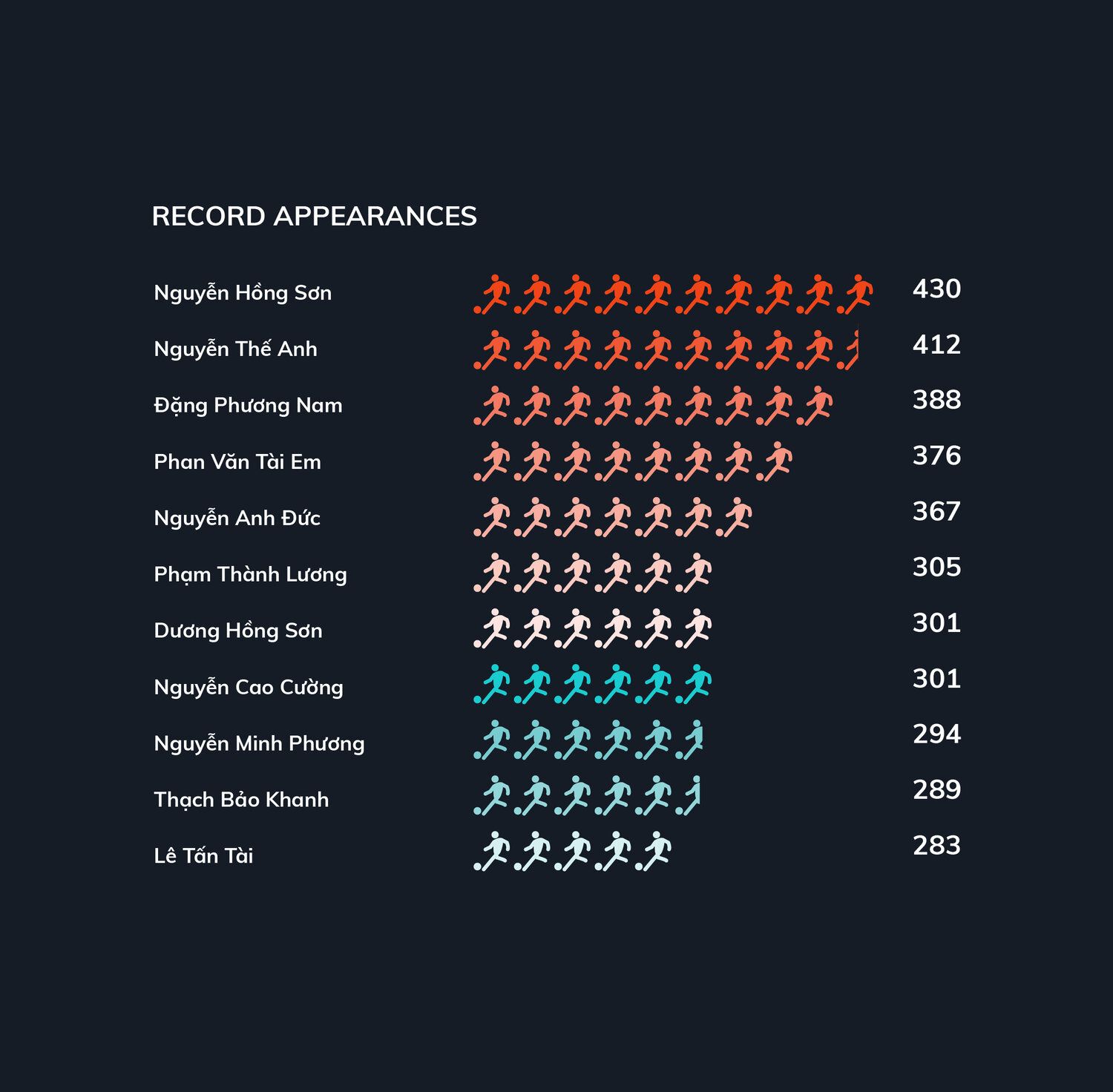
Record appearances in the V. League
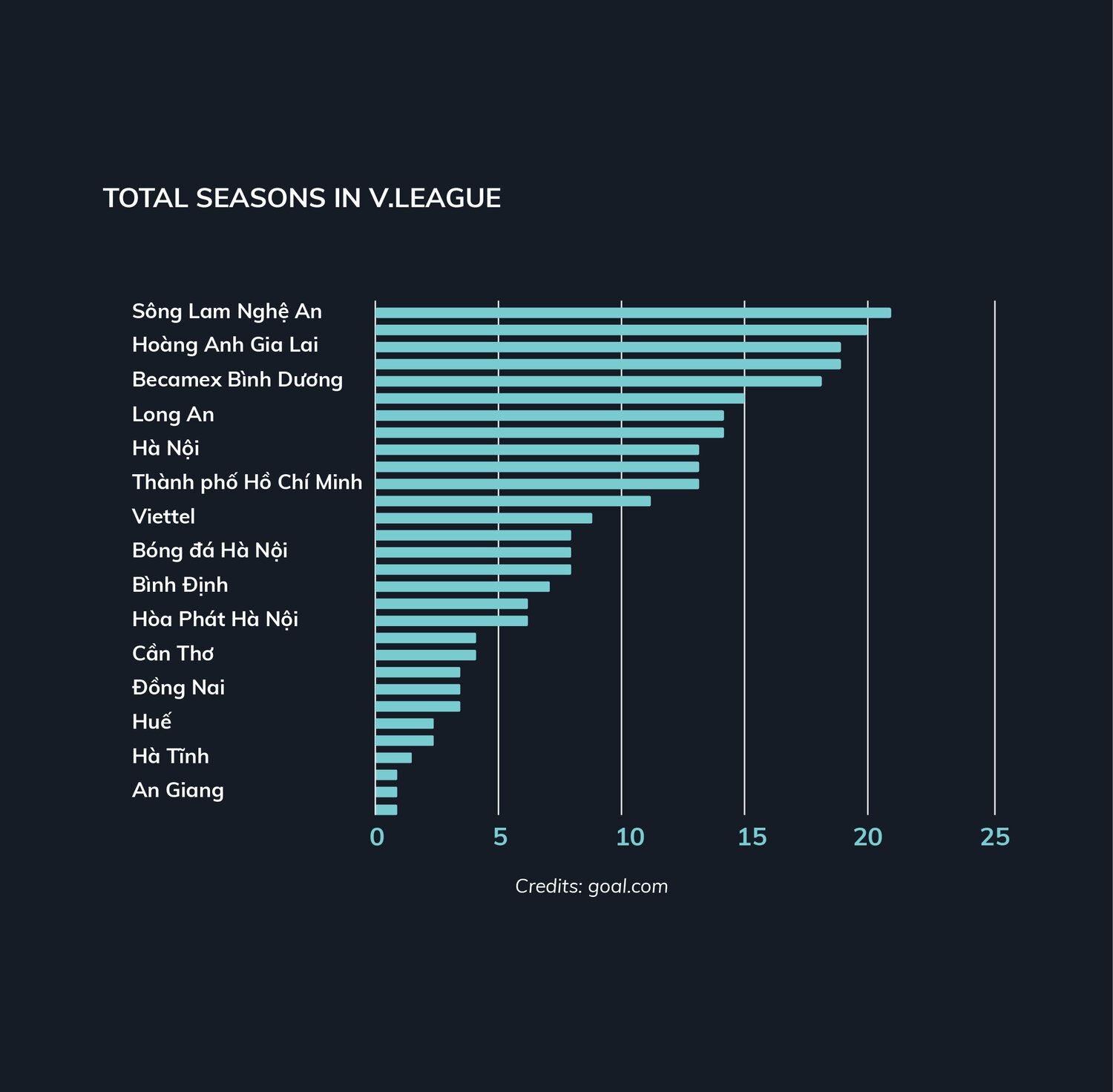
Total seasons in V.League
Vietnamese football fans
Building a community and fanbase has never been easy. There are football teams around the world that have existed for 130 years and still only get 3,000-4,000 fans per home game.
In Vietnam during 2000-2015 the ability of clubs to grow organically was further stymied by constant upheaval; stadium changes, name changes, dissolutions, mergers and reinventions, teams moving cities and changing colours. Fan bases cannot grow and community relationships cannot flourish when this is happening. However, recent years have seen teams starting to settle and become more permanent.
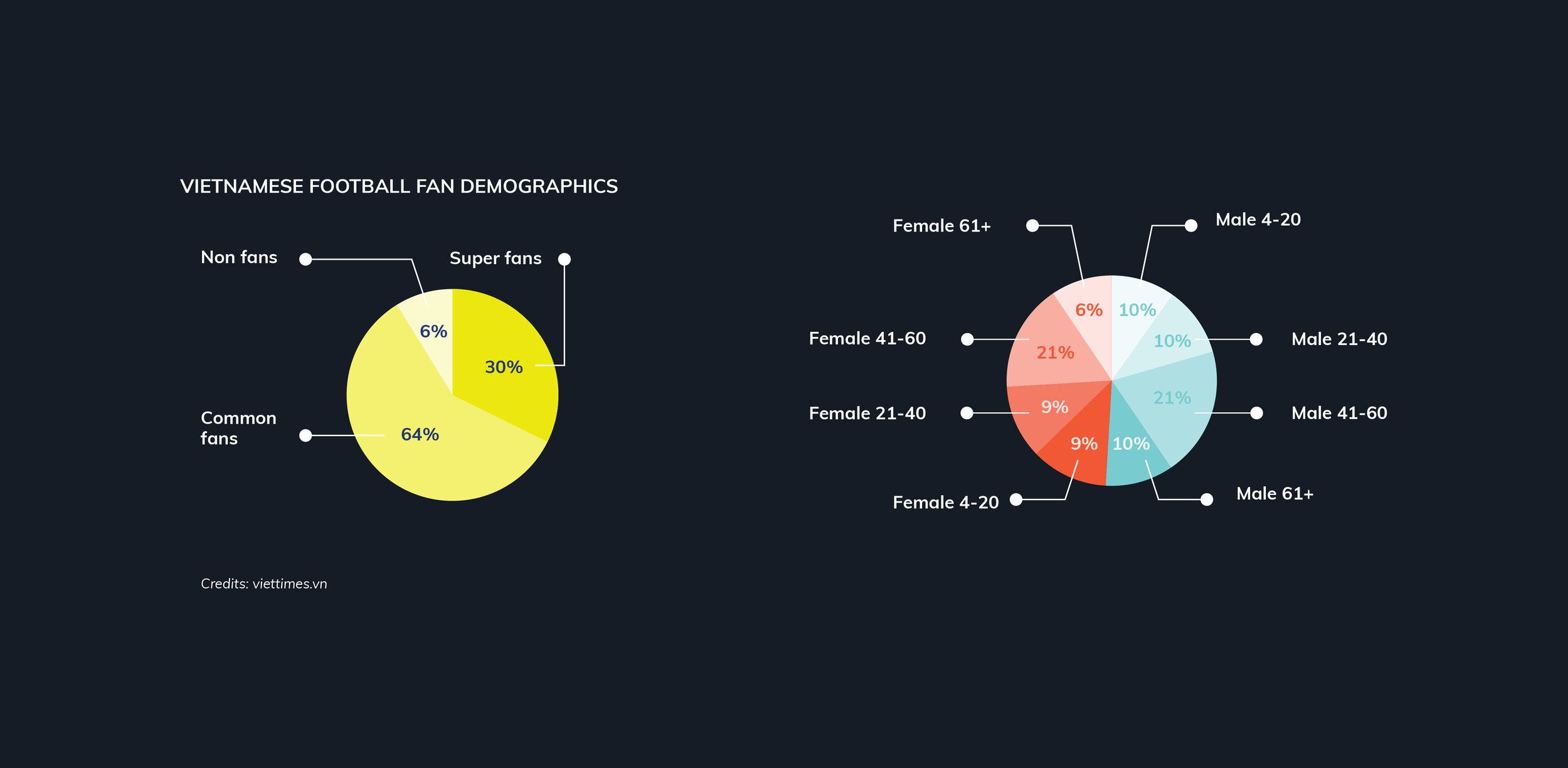
Nature abhors a vacuum – brand, quality and exoticism – foreign football turns heads.
But years of upheaval created a void: Vietnamese fans had access to live sport on television, and wanted an affiliation – an affiliation that they were unable to build with their local team. That’s when European football took its opportunity.
In the 2000s the English Premier League was free-to-air in Vietnam. Pretty much every game was shown on one of the various channels – the quality of football was excellent (certainly compared to the local product), the stadiums were full, the weekend kick-off times were ideal (3pm Saturday in the UK is 9pm Saturday in Vietnam) and the same teams played week-in, week-out.
It’s no surprise that the majority of Vietnamese fans followed Manchester United, Arsenal or Chelsea - these were the teams winning every week, and being given primetime coverage on Vietnamese sports channels, TV shows and newspaper columns.
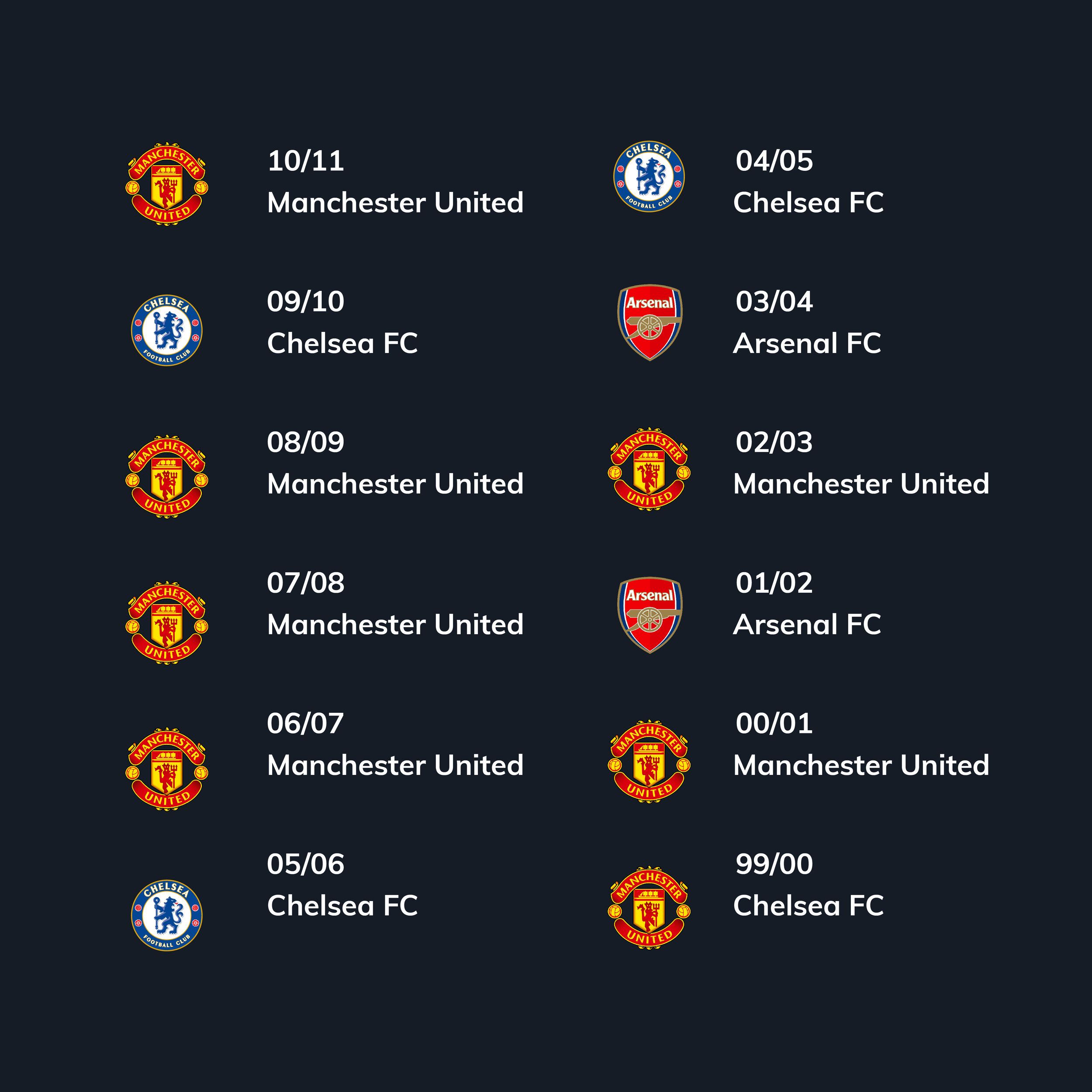
Premier League champions from 1999 to 2011. This period coincided with the arrival of terrestrial Premier League live TV broadcasting and largely shaped the popular support for English football clubs in Vietnam
The mass exposure to the Premier League also coincided with the popularity of Facebook ; it allowed fans to talk with each other from any part of Vietnam, in their own language, about the games they were watching on TV. They could associate with being a fan – they had built their own community, there were now “real” fans. The mid-2000 also saw a huge increase in internet use throughout the country, a massive uptake in mobile phone ownership: Vietnam had suddenly joined the digital age and was able — and willing — to engage with and ingest content.
Vietnamese fans’ most popular foreign clubs
While local teams were slow in building on their home-turf advantage, it now meant that overseas teams had, through no direct action of their own, a fanbase in Vietnam.
One foreign club to see this happening earlier than most was Arsenal, who signed a partnership with Hoang Anh Gia Lai, a relatively small and provincial team from the Central Highlands.
However, HAGL had something that most Vietnamese teams did not; a community.
They were a static, one-town team, they hadn’t moved around, and changed sponsors – they were formed by a businessman who had grown up in Gia Lai, they were the “safe-bet” who were going to be around for a long time.
The academy that was set up in the form of a tie-in was a fantastic success, and many years later the junior national team would reap the rewards of the HAGL Academy.
The much-lauded Vietnam U23 team that reached the final of the 2018 AFC U23 Championship contained 9 players from the academy, with 7 HAGL players being called up to the most recently senior squad in December 2020.
This success off the field also created growth on the field: the V.League’s most popular Youtube channel is Hoang Anh Gia Lai, with 327,000 subscribers. They have amassed 427,000 Facebook followers through little concerted marketing efforts.
Players carry the hopes of a nation on their shoulders – Vietnamese players abroad
Vietnam is a staunchly nationalistic country (in the good sense), and Vietnamese supporters are no different. When a player or team represents the country, the support for them is incredible.
In June 2019 24-year-old striker Nguyen Cong Phuong nicknamed the “Vietnamese Messi” due to his short and stocky frame left HAGL for the tiny Belgian club, Sint-Truidense VV. In the days before his arrival, the Belgian club had a rather modest 3,200 Facebook followers. A day after the announcement that Cong Phuong was joining the team, their followers increased ten-fold, overnight the club had become one the best-followed clubs in the Belgian league.
Similarly, a few months after Cong Phuong left these shores, young fresh-faced left back, Doan Van Hau left Hanoi FC for SC Heerenveen in the Netherlands, earning USD$22,000 a month (the minimum required by the league for foreign imports). The year previously, SC Heerenveen had finished 8th in the Eredivisie, qualifying for the European competition play-offs. Within hours of the announcement, Heerenveen’s social media numbers exploded with fans from Vietnam. The club’s Facebook page saw an increase of 20%, from 70k to 100k), within 5 days that had increased to 230,000 followers. Van Hau’s personal Facebook page increased to 1.3m followers.
Unfortunately, neither player made an impact on the pitch, with both returning to the V.League. However, given Van Hau’s young age and obvious ability there is a good chance that he could have a similar impact at any other club in Europe.
With Vietnam soccer fans being more connected than ever, and more supportive of local players, you could envisage a foreign club attracting 500k followers through the correct signing of the Vietnamese player.
On TV, Heerenveen games were being shown live every week, despite Van Hau getting few opportunities to make an appearance. Van Hau’s only appearance for SC Heerenveen has been watched more than four million times on Youtube.
Domestic support grows for foreign teams
Hoi CDV Barcelona tai VN - Cules in VietNam is the premier support group in Vietnam for fans of the Spanish giants, FC Barcelona. The Facebook page has 351,000 followers and arranges watch along parties, competitions and promotes support of the team throughout the country.
Each Premier League team in the country has a variety of different online supporters groups, there are around 60 Manchester United FC supporter groups on Facebook alone, most with followers varying between 5,000 and 650,000.
These are pages set up by fans, to talk about the team, with very limited funds or organisation.
Offline, clubs are starting to realise the potential of the Vietnamese football fans. At the end of 2020, FC Barcelona verified the first Vietnam supporter group within Vietnam and that followed other teams such as Liverpool, Real Madrid, Chelsea and Manchester United, who have done similar. The supporter groups arrange mass viewing parties, where up-to 1,000 fans will congregate to watch the games together, with some fans using the opportunity to sell merchandise and increase traffic through their social media channels.
Vietnam is developing at an incredible speed, just 15 years ago even in the big cities of Hanoi and Ho Chi Minh City there were few malls and very few chain restaurants or trendy coffee shops. Now, Ho Chi Minh City has over 20 malls, McDonalds, Starbucks, ride-sharing apps and food delivery on your phone: however, football has remained largely stayed static. The facilities are old, crumbling and desperate for a lick of paint – amenities, stores and merchandise are non-existent; football has fallen behind society in Vietnam and offers nothing in terms of a fan experience or engagement. This is one of the reasons Vietnamese fans attach themselves so much to clubs like Liverpool. Liverpool has an official supporters club, it has a Facebook page just for Vietnamese fans to absorb, it sends former players to the country to take part in events: European clubs are able to help to build the communities for loyalty and engagement.
The quality of European football is likely to exceed domestic football for a long, long time, which means Vietnamese football fans will always prefer to watch the Bundesliga, La Liga or the Premier League – they will prefer to consume the content, buy the shirts and support the well-established teams.
This, taken together with the continued failure of Vietnamese club teams to adapt, to become more engaging and community-focused, will keep pushing the “regular” football fan to seek the more polished product: the teams with great online content and engaging events.
Vietnam provides fertile grounds for football brands to make huge gains with a nuanced approach to the local market. If you would like to know more about developing a marketing presence in Vietnam, feel free to contact us at We Create Content or find out more about the Vietnam football scene by subscribing to our email series.


